The first hot weekend of summer tends to trigger the same flurry of texts in group chats: Who’s got a pool? Who’s hosting the kids? Where do we find a water slide that won’t nuke the budget? If you’ve ever tried to book one, you already know how the market feels. Search results for water slide rentals near me explode with options that look similar until you squint at the fine print. There are small backyard setups meant for toddlers, commercial water slide rentals built for heavy foot traffic at school carnivals, and combo units that straddle both worlds. Prices range widely, quality varies even more, and the cost of a bad decision is a soggy, chaotic day you can’t get back.
I’ve planned neighborhood block parties, birthday blowouts with more sugar than sense, and cautious church picnics where the safety brief was longer than the cake-cutting. I’ve learned how to spot a solid water slide rental company, what an inflatable water slide rental should cost in the real world, and which details matter if you want affordable water slide rentals without sacrificing safety or fun.
What “Affordable” Really Means When Water Is Involved
The cheapest quote is rarely the best value. With inflatables, affordability is a blend of what you pay and what you get over the entire experience. You want a slide that looks good in photos, withstands excited kids for hours, stays clean, and shows up on time. The moment you cut out quality to save a small amount, you invite headaches: late deliveries, stains and odors, flimsy seams, grumpy operators, and insurance gaps that expose you to risk.
A fair range for a backyard water slide rental in many metro areas sits between 200 and 500 dollars for a 4 to 8 hour window, depending on size, height, and whether you book a weekday or a peak Saturday. Summer water slide rentals land on the higher end during holiday weekends. Giant water slide rental units, the ones 18 to 22 feet tall with dual lanes and splash pools, can push 450 to 900 dollars, especially with long delivery distances or attendant requirements. Combo units that function as a water slide bounce house combo rental often hover between 250 and 600 dollars depending on the market and condition of the unit.
The price alone doesn’t tell you if the experience will be worth it. Factor in delivery windows, setup crew professionalism, cleaning standards, and whether the company brings the right power cords, stakes, and mats without nickel-and-diming you.
Understanding the Types: Match the Slide to the Event
Not all inflatable water slide rentals serve the same purpose. I’ve seen hosts overspend on a giant two-lane slide for a toddler party where the parents spent half their time lifting nervous kids up the steps. I’ve also watched older kids line up twenty deep at a tiny backyard slide that simply couldn’t handle the volume. The sweet spot depends on your guests, your yard, and the rhythm of your event.
Backyard slides for family events are usually 12 to 16 feet tall, with splash pools shallow enough for little ones and wide enough to keep the line moving. Perfect for water slide rentals for kids parties, birthdays, and last-minute block parties. If your guests skew 8 to 12 years old, a 16 to 18 foot slide with a steeper angle tends to satisfy the thrill craving without intimidating them.
For water slide rentals for events where attendance is high and time is tight, dual-lane or commercial water slide rentals make sense. They’re heavier vinyl, wider lanes, and more durable seams. Commercial-grade fabric like 18-ounce fire-retardant PVC with reinforced stitching holds up to a full day of traffic. Units rated for commercial use generally weigh more, require a larger footprint, and sometimes require attendant staffing. If you’re planning school fundraisers, corporate picnics, or church festivals, this is the lane you’re in.
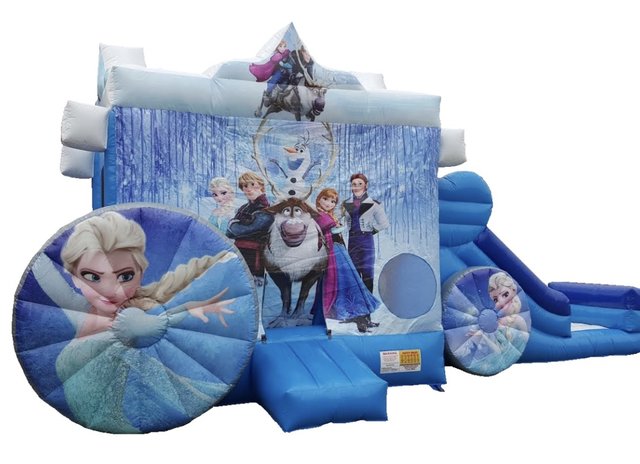
Combo units shine when you’re squeezing variety into a small yard. With a water slide rental for parties that also includes a bounce area and sometimes a small obstacle run, you get more play options without jumper house adding another rental. These make sense for mixed-age groups, but check the allowed capacity. If you’ve got a dozen kids lined up, single-lane combos can bottleneck.
Safety and Quality: How to Tell if a Company Takes It Seriously
Every water slide rental company claims they clean and sanitize. Some do it right. Some do the bare minimum. Spend 5 minutes asking direct questions and you’ll know which. A reputable provider explains how they disinfect between rentals, how long they allow the sanitizer to dry, whether they wipe down high-touch areas like handholds and steps, and how they prevent mildew. They should also mention nitrile gloves, clean tarps or mats to protect pool areas, and a basic inspection routine for tears, popped seams, or dull stakes.
Ask about training. The crew should know how to secure the slide on different surfaces. Backyard setups often go on grass, and a pro will bring long steel stakes and use proper angles to keep the anchor points tight. On concrete or pavers, they should offer sandbags or water barrels. If you get vague answers like “We just use the stakes that come with the slide,” move on.
Insurance matters. Good operators carry commercial liability insurance that explicitly covers inflatable water slide rental operations. They should be able to produce a certificate on request. For large community events, you might need to be named as an additional insured. That’s normal. If a company hesitates or upsells you heavily to provide proof, that’s a flag.
Finally, look at the vinyl. Newer units have vibrant color and obvious sheen. Older but well-maintained commercial slides still look firm and square when inflated, not wavy or underbuilt. Seams should be smooth, with tight stitching or heat-welded joints. Step pads and handholds should be solid, not peeling. If you see mildew stains, brittle patches, or sagging side walls, keep looking.
The Price Variables You Can Control
Most hosts assume price is fixed, but a few levers can lower cost without compromising on the quality of the unit.
Booking windows. Water slide rental prices usually spike on Saturdays in June, July, and early August. If your schedule allows, book a Sunday or weekday slot and ask for an off-peak rate. For https://www.jumpcityinflatablerentals.com/locations/ midweek family celebrations or small team parties, a discount of 10 to 25 percent is common in many regions.
Duration. Not every party needs 8 hours. Some companies offer a 4 to 6 hour option that trims the price but still covers the peak fun. Kids run hard on water slides. The energy naturally dips after a few hours.
Delivery distance. If you live far from the company’s warehouse, you pay more. Searching for inflatable water slide rentals near me or inflatable water slide rental near me and picking a provider within a reasonable radius can shave delivery fees and reduce the risk of delays.
Bundling. If you need tables, chairs, a small tent, or a dunk tank, bundling with one vendor often results in package pricing. Make sure the bundle doesn’t push you toward a slide bigger than you need, but ask what combinations save money. I’ve seen clients save 50 to 150 dollars through bundles that didn’t sacrifice the unit quality.
Setup complexity. If your yard has a steep slope, tight side access, or three sets of stairs, the company may charge more. Measure your gate opening and provide photos of the path from the street to the setup area. Minimizing surprises saves the crew time, and some will pass that efficiency back to you as a courtesy or reduced fee.
Sizing Your Slide to Your Space
Measure before you fall in love with a product photo. A typical backyard slide needs at least 25 to 35 feet in length and 12 to 18 feet in width, with overhead clearance for trees and lines. Giant options can require 35 to 45 feet in length, 18 to 22 feet in width, and 20 to 25 feet in height. It’s not just the footprint. The crew needs a buffer for stakes and for kids to queue safely. Tuck the entrance away from hard obstacles. Keep grills, patio heaters, and glass-topped furniture far from wet foot traffic.
Think about the water source and drainage. The hose needs to reach the top of the slide with slack. Avoid setup spots that funnel water through mulch beds or down steps. It turns into slippery mud and trampled landscaping fast. Ideal surfaces are level grass, poured concrete, or newer pavers with tight joints. If you’re running on turf, lay protective mats at high-traffic entrance points so you don’t create a mud portal.
Power matters. Most backyard slides require a single 1 horsepower blower on a dedicated 15-amp circuit. Larger commercial units may need two blowers and two separate circuits. Long extension cords cause voltage drop that strains the blower. Good rental companies use heavy-gauge cords and ground-fault protection. If they show up with a flimsy orange cord from a big-box store, stop the install and ask for the proper gear.
Water, Hose, and Usage Expectations
Plan on water usage roughly equivalent to running a garden hose on low to medium for hours. A conservative estimate is 3 to 6 gallons per minute, so a 5-hour party can put 900 to 1,800 gallons onto your lawn. Many slides recirculate into a splash pool, but you still need top-up flow to keep the landing cool and the slide slick. Set expectations with parents: swimsuits, towels, sunscreen, and water shoes if your surface is rough. For larger events, a second hose makes refills and rinses faster.
If you’re in a drought-prone area with watering restrictions, some cities allow temporary variances for single-day events. The responsibility is on you, not the rental company, to ensure compliance. Another trick in water-conscious neighborhoods: schedule a morning party so you can reclaim some of the water through lawn absorption rather than evaporation.
The Best Ways to Vet a Water Slide Rental Company
A good operator doesn’t hide behind stock photography or vague policies. Look for recent, location-specific photos of their actual units. Inspect online reviews but read them with the right filter. Customers often praise on-time delivery and crew friendliness, which matter, but dig for comments about cleanliness, how they handled wind or weather, and whether they addressed issues quickly.
Call them. You want straight answers to questions about vinyl grade, sanitizing process, insurance, and winds. Many reputable companies set wind cutoffs around 15 to 20 mph for water slides. If they say they can “make it work” in gusts above that, be cautious. Ask how they handle rainouts or rescheduling. In my experience, the best water slide rental service has a clear weather policy that trades fairness with safety. Partial credits for weather cancellations are common; firm guidance on wind is non-negotiable.
Ask about training for attendants at larger events. For water slide rentals for events where hundreds of kids cycle through, trained staff who manage the line and enforce rules are worth the small additional fee. They keep kids from racing up wet steps, space riders appropriately, and watch for fatigue. You can reduce incidents by half simply by having one vigilant attendant.
Matching Slides to Specific Occasions
Water slide rentals for birthdays come with a simple goal: give the guest of honor a memory and parents a break. If the kids are under 7, favor a smaller slide with a wide, shallow pool and plenty of grab points. For ages 7 to 10, a 15 to 18 foot unit keeps that “Wow” factor without constant hand-holding. For teen birthdays, step up to a steep 18 to 22 foot slide or a dual-lane race style if you have the space.
For water slide rentals for backyard parties where adults will stick around, a combo unit or a mid-size slide keeps conversation flowing. People gather near the action. Provide shade, a cooler with water, and a staging area for towels so parents aren’t running back inside every 5 minutes.
For water slide rentals for family events like reunions, aim for capacity and durability. A dual-lane unit reduces line friction. Depending on your crowd, you might pair a large slide with a small toddler splash pad or foam play area so older kids don’t trample the little ones. At school carnivals or public festivals, commercial water slide rentals are non-negotiable. They’re built to absorb hard use, and they interface better with formal safety checklists and permits.
When a Giant Slide Is Worth It
Not every yard needs a giant water slide rental. But when it fits, it changes the whole tone of the event. You get longer runs, faster rides, and photos that look like a theme park showed up for the day. It’s also the category where quality matters most, because larger units magnify flaws. If the seams are off, if the steps are poorly designed, or if the misting line doesn’t distribute water evenly, kids will complain and you’ll go through an extra hour of troubleshooting.
If you’re paying for the giant slide, insist on early setup. Large units take time, and the crew may need to make micro-adjustments for wind direction, slope, and water flow. Give them the time to get it right. Ask for a walkthrough: how to power cycle the blower, where the GFCI is, how to adjust the water flow, and what the emergency plan is if winds pick up during the party.
The Fine Print That Affects Your Budget
Most operators require a deposit to reserve your date. Expect 20 to 50 percent depending on the company and the season. Clarify if it’s refundable, transferrable, or credit-only for weather issues. Ask about taxes and fees, especially for credit card payments. Some companies will reduce the total slightly for cash or ACH.
Damage and cleaning fees vary widely. Normal grass stains and minor scuffs are typically included in standard cleaning. What’s not included: gum, glitter, slime, Silly String, or anything with dye. Those can damage vinyl permanently. Make it clear in your event invite that these are off-limits. It prevents awkward conversations later.
If your community has HOA rules about noise or visible inflatables, notify them. A surprise HOA notice can shut you down mid-party. Nighttime rentals may require lighting or stricter quiet hours. If your party runs past dusk, ask for LED rope lights that mount safely on the structure. Avoid improvised lighting that introduces trip hazards or electricity near pools.
A Simple Pre-Event Game Plan That Saves Money and Stress
Here’s a compact planning cadence that keeps costs in check and quality high.
- Two weeks out: Confirm guest count, age range, and yard measurements. Choose your unit size with realistic capacity in mind. Ask for weekday or off-peak pricing if your date is flexible. Ten days out: Send photos of your setup space and access path. Confirm power outlets, circuit availability, and hose reach. Ask the company to bring the proper cords, GFCI, and mats. Three days out: Check the forecast for wind and storms. Review the company’s weather policy. Prepare a shaded staging area with towels, sunscreen, and a small first-aid kit. Day of: Mow and water the lawn a day earlier to avoid loose clippings. Clear pet waste, toys, and sprinklers. Meet the crew, ask for a quick safety overview, and verify anchors and GFCI. During the party: Keep an adult close to the slide entrance. Enforce rider spacing and feet-first rules. Adjust water flow so the slide stays slick but the pool doesn’t overflow.
This is the kind of simple plan that turns decent rentals into exceptional experiences.
Common Mistakes That Drive Up Cost or Risk
Two missteps show up repeatedly in my notes. The first is underestimating wind. Wet vinyl plus height equals a legitimate lift hazard. Good operators cancel or deflate when gusts exceed their stated limit. Respect it. Rescheduling beats risk.
The second is ignoring capacity limits. Put too many kids on the ladder, and the structure sways and steps become slippery. A pro tip for water slide rentals for kids parties: assign two older cousins or friends as “gatekeepers” who count riders and cheer them on. Kids listen to big kids almost as well as they listen to adults.
Another avoidable issue is hose placement and flow. High water pressure makes slides fast but can overfill pools and wash mulch everywhere. Dial back until the flow keeps the surface slick and the landing comfortable. If you’re on well water with low pressure, advise the company up front. They may bring a unit with a more efficient misting line.
Finally, avoid last-minute yard rearrangements. Moving heavy patio furniture on party morning creates hazards and delays the crew. Set the space the night before, mark the spot for the slide, and keep brunch chairs out of the delivery path.
How “Near Me” Changes the Value Equation
Choosing a provider close to your location matters for reasons beyond delivery fees. Local crews know neighborhood bylaws, city park rules, and common yard quirks. When you search for water slide rentals near me or inflatable water slide rentals near me, you’ll often find smaller operators with fewer layers of scheduling bureaucracy. If a blower trips a breaker, a nearby company can swing back quickly with a second cord or an extra unit. That responsiveness is part of quality.
There’s also an accountability factor. Local companies live or die by school and neighborhood referrals. If they consistently deliver clean slides, show up on time, and solve problems without drama, word travels fast. Those are the firms that quietly become the best water slide rental service in a given area, even if they aren’t the cheapest or the most heavily advertised.
Real-World Price Benchmarks and What Drives Outliers
If you’re seeing water slide rental prices that feel wildly low or high, there’s usually a reason. Sub-200 dollar quotes for a weekend peak day often mean older units, limited cleaning, or side-gig operators without full insurance. That doesn’t automatically make them bad, but the risk profile is different. At the other extreme, quotes north of 1,000 dollars for a single-unit backyard booking typically come with premium branding, high labor costs, or long-distance delivery. For a standard backyard event, most families find the best value between those two ends, with a reliable company, a mid-size slide, and a clear contract.
For larger gatherings, price out a commercial slide with an attendant and compare it to two smaller backyard slides. Two smaller units can sometimes outperform one giant slide on throughput. Twice the entrances means less line friction, even if the slides are shorter. The trade-off is more space and more power. If you have the outlets and the yard, it can be a smarter spend.
Cleaning and Post-Party Wrap-Up
A good crew will deflate, wipe surfaces, and roll the unit efficiently without leaving the lawn a wreck. If they use a dolly with wide tires, the turf typically recovers in a day or two. Avoid running the mower for 24 hours after the event so the soil can settle. If you collected small debris around the pool area, don’t dump it on the lawn. It becomes sticky when dry. Bag it.
Expect a quick post-event text or email. Many companies check in to verify you were satisfied. If you encountered a minor issue and they resolve it gracefully, that’s a sign you picked a partner worth using again. Your second rental is almost always smoother than the first, because you understand each other’s routines.
When to Choose a Combo Unit Over a Dedicated Slide
Combos shine in smaller yards and with mixed-age guests. You get bounce, climb, and slide in one footprint, which cuts cost and keeps kids from getting bored. The drawback is throughput. Single-lane combos create lines during peak moments, and bouncing plus water equals higher humidity inside the structure. Pick a combo with a wide mesh window and a roof for shade. Ask about the slide angle too; some combos have almost flat slides that frustrate older kids. Try to see a video of the exact model.
Dedicated slides are better for pure speed and higher capacity, especially with dual lanes. If your party theme revolves around water games, races, and outdoor energy, a standalone slide earns its keep. If your goal is variety in limited space, the combo is the budget-friendly play.
A Quick Reality Check on DIY and Ownership
Some hosts wonder if buying a consumer-grade inflatable makes sense. For a single summer, it rarely does. Consumer inflatables can be fun for small kids, but they don’t match commercial safety, materials, or warranty. They’re also storage hogs and require careful drying to prevent mildew. If you plan six or more water events per summer for multiple years, and you have dry storage plus time to maintain it, ownership can pencil out. Otherwise, a well-run water slide rental company takes the workload off your plate and shows up with gear that’s designed to be used hard and cleaned hard.
Bringing It All Together
There’s a way to make affordable water slide rentals work without cutting corners. Start by matching the unit to your space and your guests. Choose a provider with clean equipment, visible insurance, and strong communication. Shape the price by playing with date, duration, bundle options, and distance. Confirm the details that actually affect the day, from power and hose length to wind thresholds and yard access. If you do those things, your water slide rental for parties, birthdays, or community gatherings turns into what it should be: a loud, joyful blur of laughter, splash, and shared memories, not a line item you regret.
And one final note after too many summers of trial and error: greet the crew, offer cold water, and give them five minutes to walk you through the controls. That small courtesy and clarity up front do more for quality than any coupon code.